

Reference
How important is your title?.
How important is your title?

Tomislav Simnett
2 min read
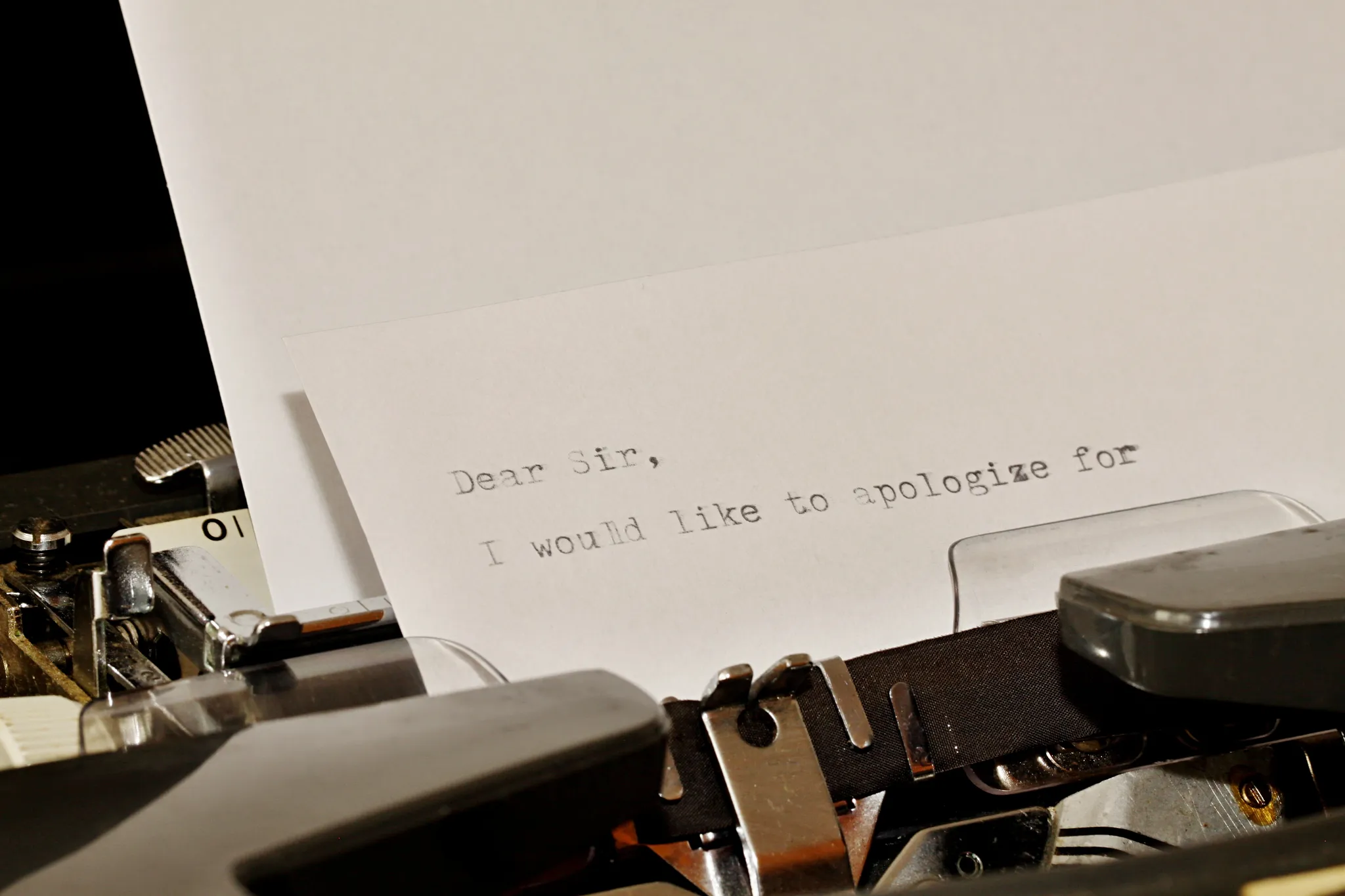
Mr, Mrs, Sir, Professor (or Prof for short). Esq., MSc, MPhil. Some of us use them, and some of us don’t. So how do you like to be addressed when someone you don’t know emails you, or writes to you, or welcomes you to their site? John, Sarah, Mrs Emily Rogers, Sir David Platt? Everyone seems intent on separating all the information out. So often you want to sign up for something and you’re asked for your title, your first name and your surname (better ones ask for your last name).
How comfortable are you telling people your title?
What happens then if you don’t want to tell people your title, or you don’t like to use it in addresses to yourself? And what if you don’t have a last name? Well, I’m sorry, but you can’t sign up unless you fill in all the details that we’ve marked as mandatory.
Six months down the line and you’ve signed up for a site selling contact lenses cheap online as Mr John Doe. You get an email and the subject line says “Get new contact lenses even cheaper now, John”. Great. So you’ve now had to fill in all your information, only for the site to make a mockery of how you like to be addressed, or really how it thinks you’d like to be addressed.
How can this be resolved?
Quite easily: just ask for a name. Let the user decide what form that takes, and even if it is to be in English or not. A single field that looks something like this:
“Name:
You’ve resolved a whole host of issues here. Namely that the person now feels that they can be addressed as they wish to be addressed and you don’t have to check to make sure they have a title, first name and surname before letting them submit the form. It’s quicker for the user to fill in the form, so you’re more likely to have them continue through rather than dropping out.
A short article describing an easy resolution to a problem created because we feel the need to have more data capture. This is not only more, it’s simpler, and more importantly, more accurate.”
How much capacity is your business leaving behind?
Use the calculator to estimate what slow processes, manual work and disconnected systems could really be costing you.
More posts.
View all
Business
Your Software Holds the Data. But Does It Know How Your Business Works?
Your software might hold all the data about your business, but does it actually know how your business works? In two recent conversations, I challenged business leaders to question something they'd always taken for granted: whether the work their people were doing needed a person to do it at all.
From unnecessary CRM administration to an entire department dependent on one employee's knowledge, both conversations revealed opportunities that went far beyond making existing tasks easier. What if our systems could understand how work happens, learn from our best people and eventually take responsibility for much of the routine work themselves?
Tomislav Simnett
8 min read
Tech
AI can write the code. Your business still needs an engineer
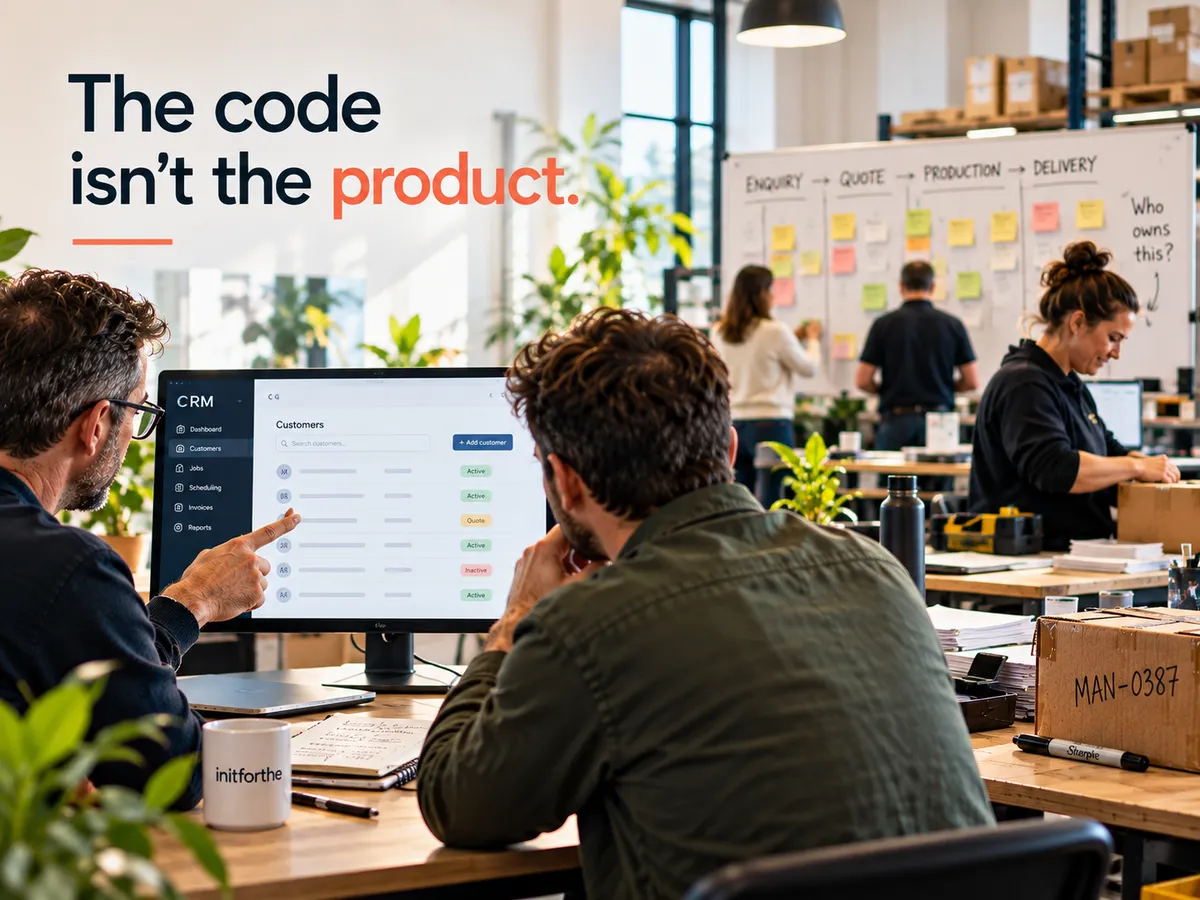
AI can now write a lot of the code we used to pay developers to write. That doesn’t make software engineering irrelevant. It makes the bit that was always more important much harder to ignore: understanding what should be built in the first place.
Vibe coding can turn your assumptions into working software incredibly quickly. But if the assumption is wrong, you’ve simply built the wrong thing faster. Good engineering starts before the app, CRM or automation. It starts by understanding how the business actually works, where people add judgement, and which parts of the process shouldn’t exist at all.
Tomislav Simnett
11 min read
Business
Four interruptions, two lost hours and the process your people shouldn’t be driving
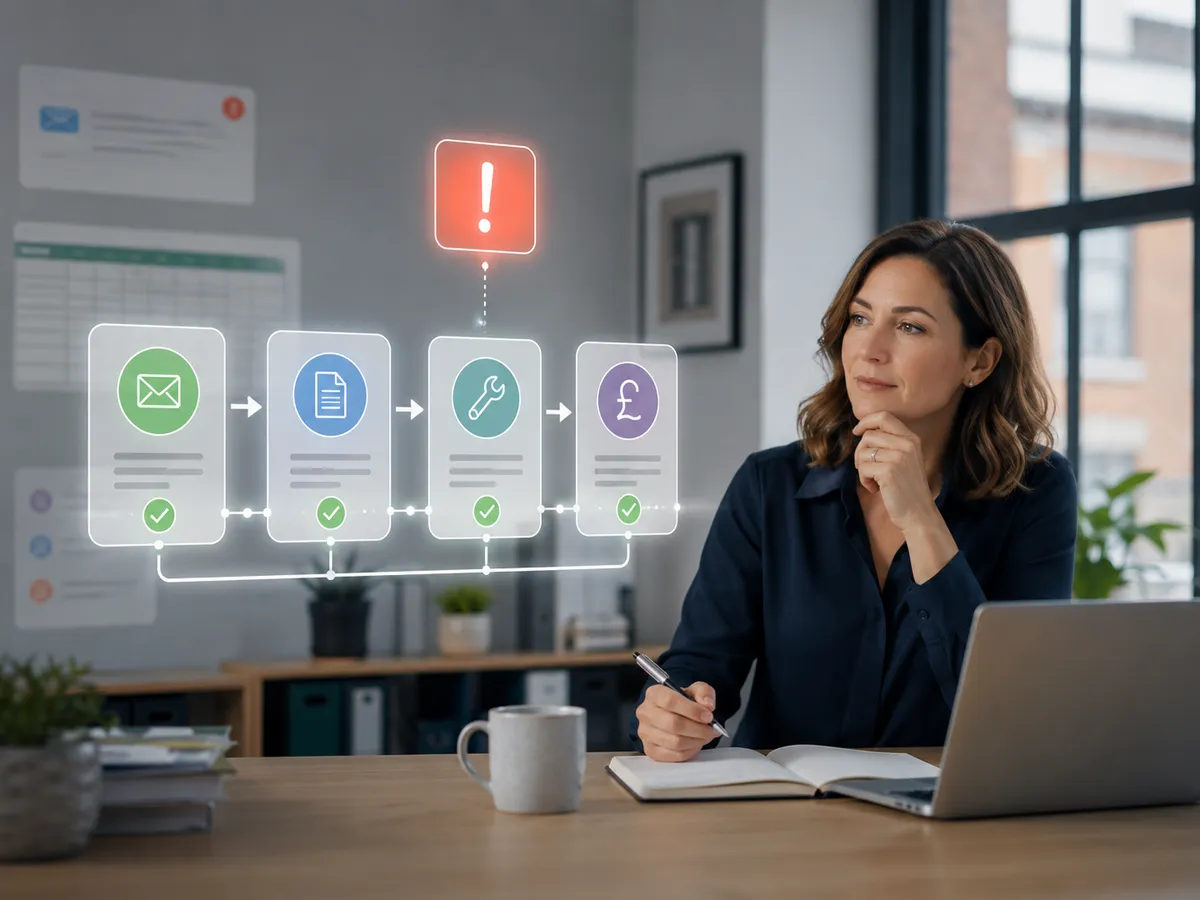
Four interruptions can wipe nearly two hours from the useful part of a working day, and that’s before you count the interruption itself. Add long manual processes, routine human error, rework and stress, and you get a working environment where good people spend too much time recovering, correcting and chasing.
The answer isn’t to tell people to focus harder. It’s to design a better system, one that drives the process, preserves context, moves routine work automatically and only interrupts people when their judgement is genuinely needed.
Tomislav Simnett
10 min read