

Business
The Benefits of using Agile software development.

Andrew Carson
2 min read
What is Agile Software Development
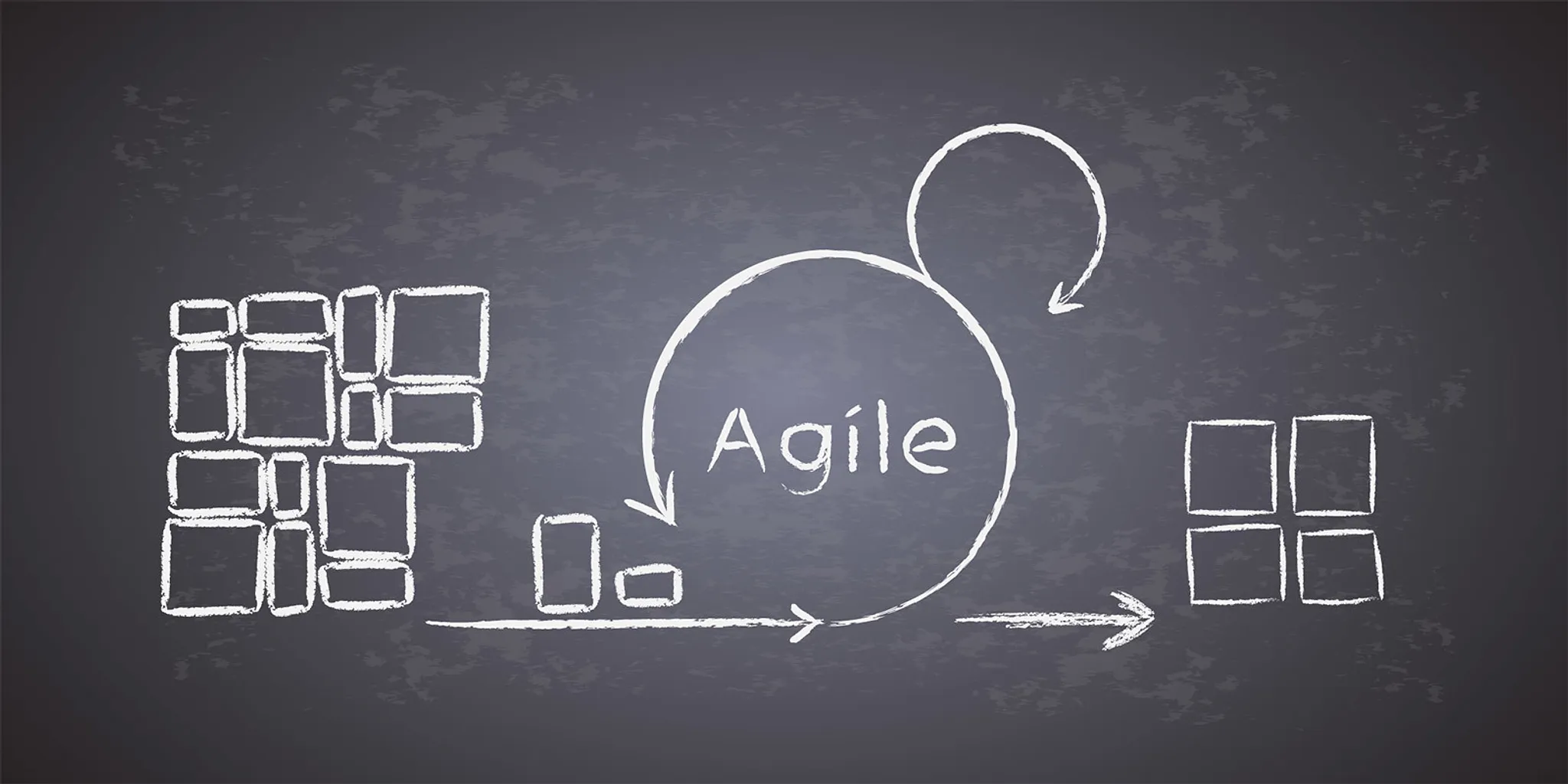
Agile software development (such as Scrum) is about collaboration with a focus on a disciplined approach to project management. Frequent inspection and adaptation are implemented to ensure that each stage of the project is effectively accepted, developed and completed within a strict timeframe.
With transparency between the client and development team on the various stages (known as Sprints), Scrum encourages involvement and effectively manages expectations whilst virtually eliminating the chances of absolute project failure.
By implementing iterative and incremental practices, Scrum is used to manage complex software and product development. With a focus on significantly increased productivity and reduced time, Scrum processes enable organisations to adjust smoothly and present a product that meets growing business goals.
Quality
Regular check-ups are a part of the cycle through integrated testing, which not only showcases the product working through the development but also allows the product owner to make changes whilst also informing the team of any key issues.
This also factors the ability to hold team retrospectives regularly to continuously improve the work and processes involved.
By working in sprints, small incremental releases are often released earlier in development instead of waiting for the whole product, allowing businesses to generate results.
Risk Reduction
No company likes the thought of risk involved, and indeed many shy away when faced with the prospect of it.
Scrum and Agile ensure having a working product, starting with the very first sprint, so that no project fails completely. Risks are identified early and are easy to respond to in quick succession.
As change is inevitable in any project, so too is it expected and accepted through the methodology. Risks are regularly reviewed and reduced by the Scrum team and decisions made at a suitable time, ensuring a flexible work pattern to ensure the project can overcome any unexpected changes that come along.
ROI
For companies in fast-moving markets, long delivery cycles are often a problem.
With Agile/Scrum, the team understands what’s most important to the client’s business, and can deliver features in the most valuable order. By allowing the client to determine the priority of features, a functional market ready product can be realised early while the product is in the development process.
This process allows for a business to begin to generate results and a quicker return on investment by being able to make alterations accordingly and ensure the vital parts of the project are running to their satisfaction.
Effect on team
By using a team-based methodology, there is a shared sense of ownership and responsibility to reach the goals set. When teams feel a sense of purpose they tend to set a faster pace of working.
This grows a greater sense of teamwork and learning, leading to a collective understanding of problem-solving and planning through daily roundtable meetings to address the project going forward.
In the fast-moving and rapidly evolving world, Agile software development is a key component in the accelerated growth of forward-thinking businesses looking to stay ahead of their competition.
Company directors want fast solutions and faster results with little room for human error which can set them back months.
Agile and Scrum give company directors transparency, cost control and business value whilst greatly reducing the risk of writing off expensive and time-consuming projects.
How much capacity is your business leaving behind?
Use the calculator to estimate what slow processes, manual work and disconnected systems could really be costing you.
More posts.
View all
Business
Your Software Holds the Data. But Does It Know How Your Business Works?
Your software might hold all the data about your business, but does it actually know how your business works? In two recent conversations, I challenged business leaders to question something they'd always taken for granted: whether the work their people were doing needed a person to do it at all.
From unnecessary CRM administration to an entire department dependent on one employee's knowledge, both conversations revealed opportunities that went far beyond making existing tasks easier. What if our systems could understand how work happens, learn from our best people and eventually take responsibility for much of the routine work themselves?

Tomislav Simnett
8 min read
Tech
AI can write the code. Your business still needs an engineer
AI can now write a lot of the code we used to pay developers to write. That doesn’t make software engineering irrelevant. It makes the bit that was always more important much harder to ignore: understanding what should be built in the first place.
Vibe coding can turn your assumptions into working software incredibly quickly. But if the assumption is wrong, you’ve simply built the wrong thing faster. Good engineering starts before the app, CRM or automation. It starts by understanding how the business actually works, where people add judgement, and which parts of the process shouldn’t exist at all.
Tomislav Simnett
11 min read

Business
Four interruptions, two lost hours and the process your people shouldn’t be driving
Four interruptions can wipe nearly two hours from the useful part of a working day, and that’s before you count the interruption itself. Add long manual processes, routine human error, rework and stress, and you get a working environment where good people spend too much time recovering, correcting and chasing.
The answer isn’t to tell people to focus harder. It’s to design a better system, one that drives the process, preserves context, moves routine work automatically and only interrupts people when their judgement is genuinely needed.
Tomislav Simnett
10 min read