

Web Development
What does having a good responsive website mean?.
Do you have one?

Tomislav Simnett
3 min read
When planning out new websites, one of the first things we do is ask for analytics logins. We do this so we can find out what platforms existing visitors use, so we can start to get a gauge of how mobile-centric they are, and whether they use newer browsers or older ones. This information can be invaluable in identifying where to invest valuable budget for the best possible return. During the scoping process, we'll often be asked by our clients about mobile - is it worth it, what are the pitfalls and ramifications of doing it? So this post seeks to answer some of those questions and give some tips on how best to approach the issue.
Should I have a mobile website?
Invariable, the answer is yes. Or at least you should be designing a site that works as well on a phone or tablet as it does on a laptop. That doesn't mean it has to serve the same purpose, or look exactly the same either, but your brand essence should definitely shine through at all times.
What's the difference between a responsive site and a mobile site?
Something we're asked a lot, and something which I feel is still a little too hidden away. Let's try to break this barrier down.
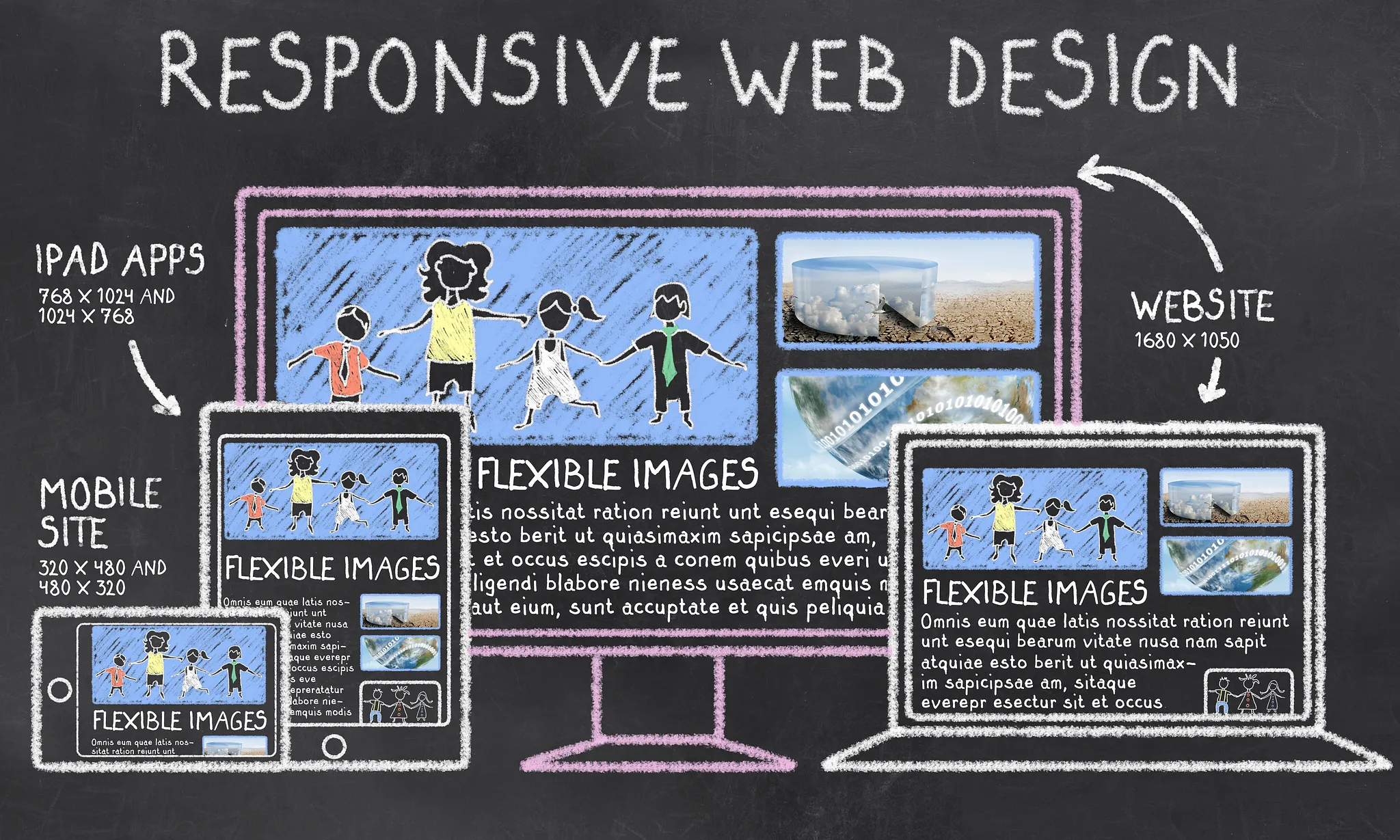
A mobile site is one that is specifically designed for mobiles. You'll likely have seen these - they have addresses like http://m.facebook.com. A responsive site on the other hand doesn't have a different address. It's the same site, and depending on what size your screen is, it changes what it looks like. Try looking at this website on your tablet, or your phone, and then on your laptop. On your phone and tablet, try changing from landscape to portrait and see how the screen changes what shows where - that's responsive; it responds to your device.
Why should I choose one over the other?
The first thing to understand is what you're trying to achieve with your site. If you're a bar or pub and you want more footfall, then you need to tell people where you are. If on the other hand, you're an architect, then it might be that your potential client is looking at your site on their tablet in front of the telly whilst watching Dragons Den of an evening.
That same bar customer looking to find where their friends are won't be doing that when they're trying to book a staff party - they'll be on their laptop.
What I'm saying is that people can use a single website for different purposes, and their reasons for doing so will change depending on where they are and the device they're using. A well-designed website will be able to cater to all of these needs without fuss, and so on the question of which is better: responsive website or mobile website? Both. Depending on what you're trying to do.
There are of course plenty of websites out there that have got the wrong end of the stick and have a mobile website for the sake of it or a responsive one for the same reason. The truth is, there is no one size fits all with good mobile design, and you need to really understand your customers and what they do to be able to serve them in the best possible way.
If you'd like to find out how a mobile website might help your business, why not get in touch. Alternatively, you can sign up to our newsletter for tips and tricks and the latest news from the industry.
How much capacity is your business leaving behind?
Use the calculator to estimate what slow processes, manual work and disconnected systems could really be costing you.
More posts.
View all
Business
Your Software Holds the Data. But Does It Know How Your Business Works?
Your software might hold all the data about your business, but does it actually know how your business works? In two recent conversations, I challenged business leaders to question something they'd always taken for granted: whether the work their people were doing needed a person to do it at all.
From unnecessary CRM administration to an entire department dependent on one employee's knowledge, both conversations revealed opportunities that went far beyond making existing tasks easier. What if our systems could understand how work happens, learn from our best people and eventually take responsibility for much of the routine work themselves?
Tomislav Simnett
8 min read
Tech
AI can write the code. Your business still needs an engineer
AI can now write a lot of the code we used to pay developers to write. That doesn’t make software engineering irrelevant. It makes the bit that was always more important much harder to ignore: understanding what should be built in the first place.
Vibe coding can turn your assumptions into working software incredibly quickly. But if the assumption is wrong, you’ve simply built the wrong thing faster. Good engineering starts before the app, CRM or automation. It starts by understanding how the business actually works, where people add judgement, and which parts of the process shouldn’t exist at all.
Tomislav Simnett
11 min read

Business
Four interruptions, two lost hours and the process your people shouldn’t be driving
Four interruptions can wipe nearly two hours from the useful part of a working day, and that’s before you count the interruption itself. Add long manual processes, routine human error, rework and stress, and you get a working environment where good people spend too much time recovering, correcting and chasing.
The answer isn’t to tell people to focus harder. It’s to design a better system, one that drives the process, preserves context, moves routine work automatically and only interrupts people when their judgement is genuinely needed.
Tomislav Simnett
10 min read