It's been a hot topic recently with articles across the board stating their position and even concerns that the younger generation will avoid the industry due to fears there won't even BE an industry to go into in the future.
So my two cents on this - NOT GONNA HAPPEN!
Yes AI has undeniably revolutionised the tech industry, it offers powerful tools that enhance productivity and efficiency. However, the true essence of software development lies in the creativity and problem-solving skills of developers, WHICH AI CANNOT REPLACE!
AI excels in handling repetitive tasks, analysing large datasets, and even suggesting code snippets. These capabilities allow developers to focus on more intricate aspects of their work. Yet, the human touch is essential for understanding context, ethics, and user experience, which are crucial for creating innovative solutions.
The true beauty of software development is much like solving a complex puzzle. Developers must navigate through ambiguous requirements, unforeseen issues, and evolving technologies. This requires not just technical proficiency, but also a deep well of creativity and intuition. It's about seeing beyond the immediate problem, envisioning potential future challenges, and crafting elegant solutions that stand the test of time.
Moreover, creativity in development fosters innovation. Developers who think outside the box can devise unique approaches that AI, bound by its algorithms, cannot. They can draw from diverse experiences and disciplines, infusing their work with originality that machines cannot replicate. In addition, software development often involves a collaborative effort. Effective communication, teamwork, and the ability to understand and incorporate diverse perspectives are vital. These human-centric skills are areas where AI falls short. And how do we know this...?
The Frame Problem in AI
The challenge AI systems face when they need to determine which aspects of their knowledge should be updated in response to an action. Unlike humans, who intuitively understand the relevance of different factors in various contexts, AI struggles to adapt flexibly and make judgements about what is important in ever-changing environments. The frame problem highlights a critical area where human intelligence surpasses AI.
Developers continuously evaluate and reinterpret the scope and implications of their work, considering subtle nuances and dynamic conditions. This ability to frame problems correctly and adapt solutions accordingly is a cornerstone of software development, emphasising the irreplaceable value of human creativity. So yes AI is a valuable ally in the world of software development, but it cannot replace the creative problem-solving abilities of developers.
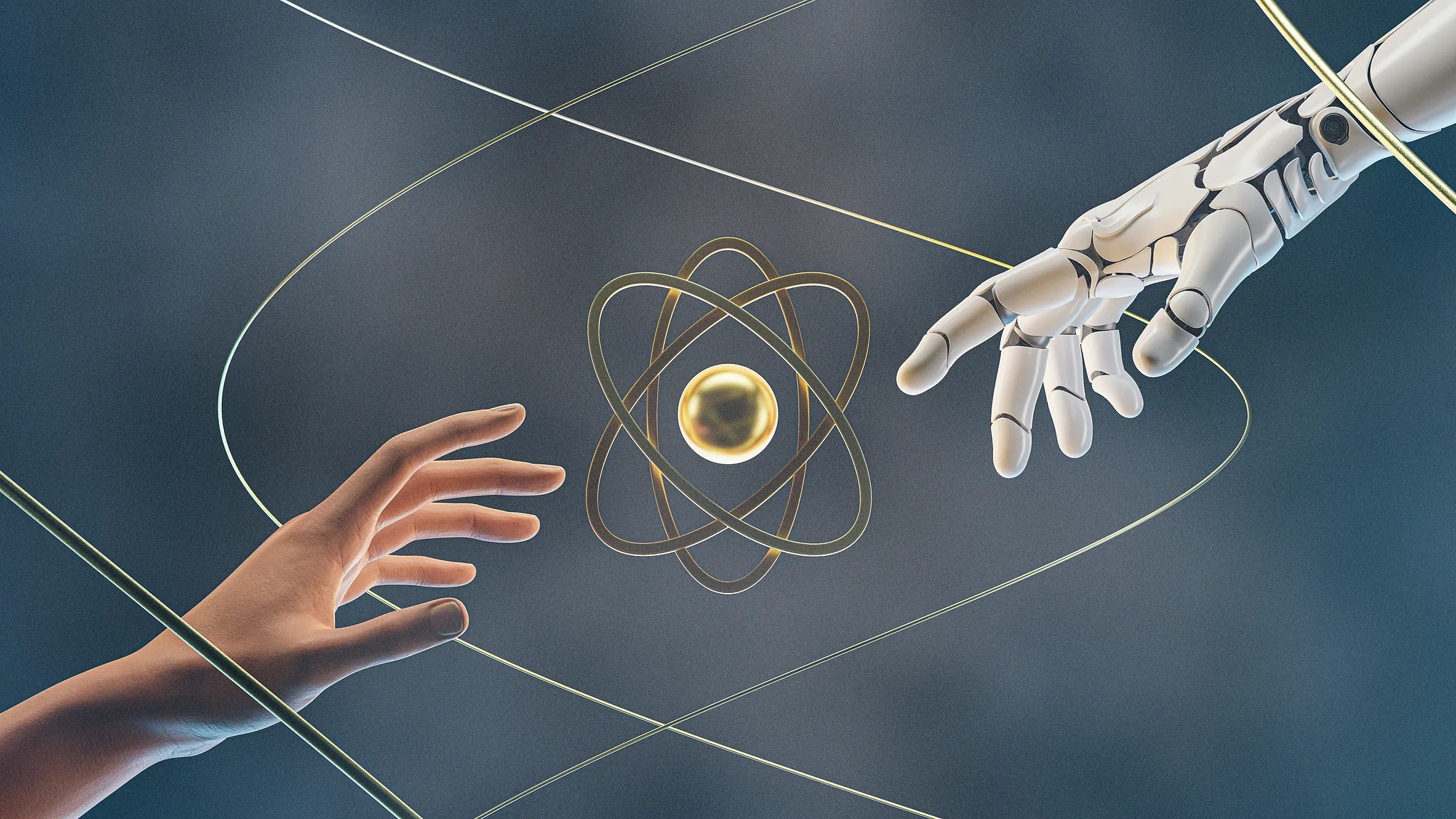
The future of the tech industry lies in a harmonious partnership between human ingenuity and AI capabilities. Whilst I'd always encourage developers to embrace this synergy, developers can push the boundaries of innovation, creating solutions that are not only efficient but also deeply insightful and impactful. AI is here to stay but so are the software developers....
How much capacity is your business leaving behind?
Use the calculator to estimate what slow processes, manual work and disconnected systems could really be costing you.
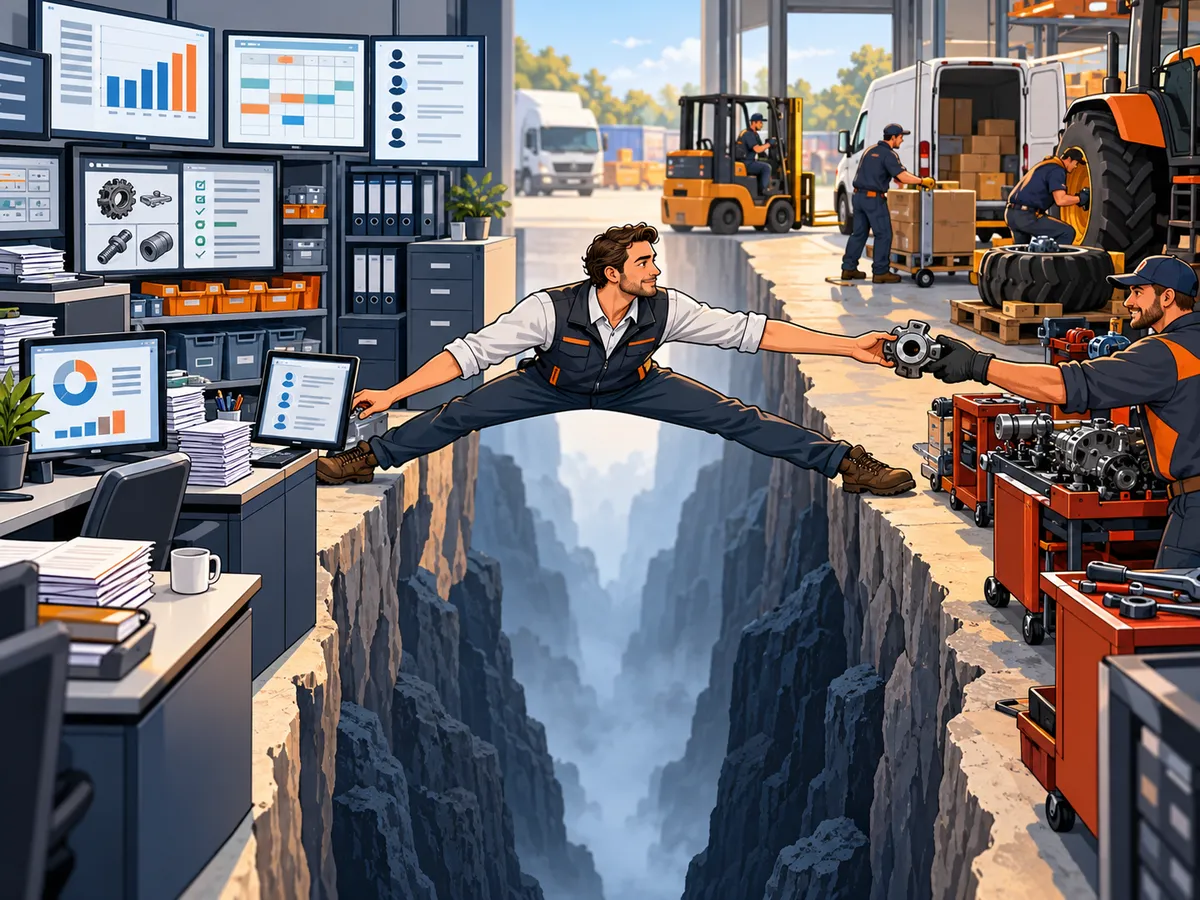
Your software might hold all the data about your business, but does it actually know how your business works? In two recent conversations, I challenged business leaders to question something they'd always taken for granted: whether the work their people were doing needed a person to do it at all.
From unnecessary CRM administration to an entire department dependent on one employee's knowledge, both conversations revealed opportunities that went far beyond making existing tasks easier. What if our systems could understand how work happens, learn from our best people and eventually take responsibility for much of the routine work themselves?
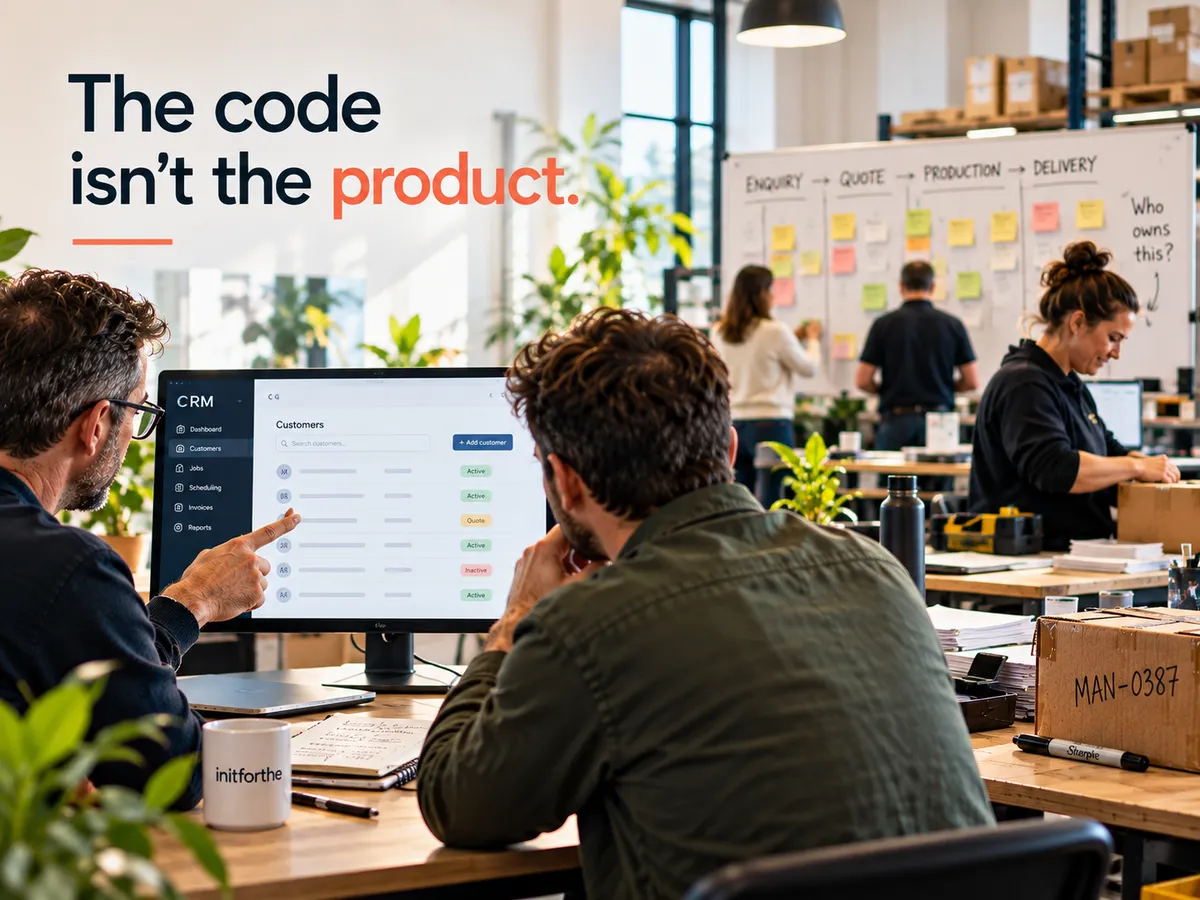
AI can now write a lot of the code we used to pay developers to write. That doesn’t make software engineering irrelevant. It makes the bit that was always more important much harder to ignore: understanding what should be built in the first place.
Vibe coding can turn your assumptions into working software incredibly quickly. But if the assumption is wrong, you’ve simply built the wrong thing faster. Good engineering starts before the app, CRM or automation. It starts by understanding how the business actually works, where people add judgement, and which parts of the process shouldn’t exist at all.
Four interruptions can wipe nearly two hours from the useful part of a working day, and that’s before you count the interruption itself. Add long manual processes, routine human error, rework and stress, and you get a working environment where good people spend too much time recovering, correcting and chasing.
The answer isn’t to tell people to focus harder. It’s to design a better system, one that drives the process, preserves context, moves routine work automatically and only interrupts people when their judgement is genuinely needed.