

Business
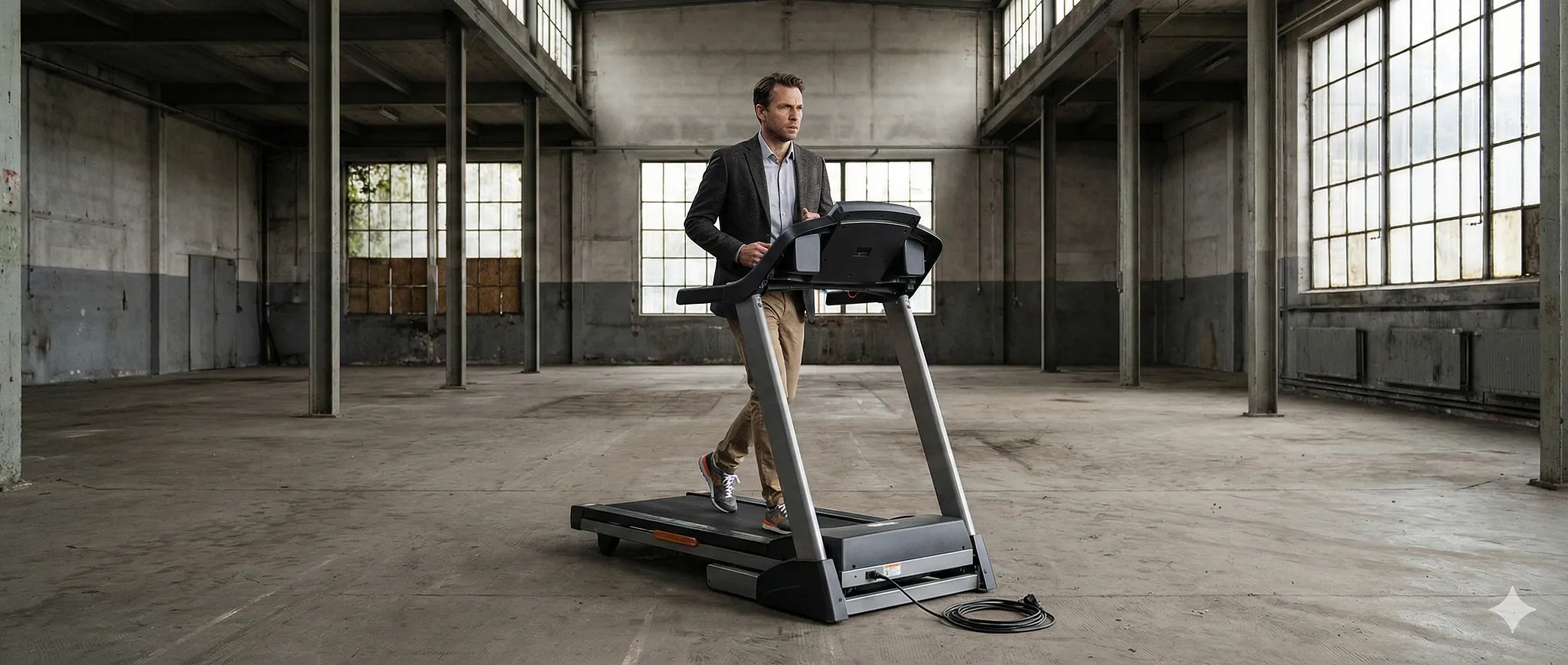
You bought Lean Six Sigma and it didn’t change a thing.

Tomislav Simnett
4 min read
If you bought Lean Six Sigma and nothing fundamental changed, that was not a failure of execution. It was a failure of intent.
You bought it because something wasn’t working. Delivery was slow. Friction was high. People were firefighting. So let’s be clear about the outcome, not the effort.
Did it actually change how work flows through your organisation, or did it simply make the existing mess more tolerable? Did it remove constraints, or did it teach people how to work around them more efficiently? Did it genuinely challenge your core systems, processes, and software, or did it accept them as fixed and optimise everything else around their limitations?
If how work really happens feels broadly the same, then nothing meaningful changed. And that is not bad luck. It is a choice.
You bought it because something wasn’t working. Delivery was slow. Friction was high. People were firefighting. So let’s be clear about the outcome, not the effort.
Did it actually change how work flows through your organisation, or did it simply make the existing mess more tolerable? Did it remove constraints, or did it teach people how to work around them more efficiently? Did it genuinely challenge your core systems, processes, and software, or did it accept them as fixed and optimise everything else around their limitations?
If how work really happens feels broadly the same, then nothing meaningful changed. And that is not bad luck. It is a choice.
You didn’t redesign the business. You optimised around it.
Lean Six Sigma is almost always applied on top of what already exists. The same operating model. The same reporting lines. The same brittle processes. The same software everyone complains about but never replaces.
The people brought in to “drive change” rarely have the authority or capability to change those foundations, so they do the only thing they can do. They make do.
They standardise handovers that should not exist. They reduce variation in processes that should be deleted. They measure efficiency inside systems that were never designed for the outcomes you now care about. This is not transformation. It is coping, done professionally.
You can see this most clearly in how many organisations still treat work as something you manually move around. States change because someone selects a dropdown, not because the work itself has actually progressed.
Ask yourself a simple question. Are your workflows driven by outcomes, or by people telling the system what state something is in?
In a well-designed system, work moves forward because something real has happened. Data has changed. A decision has been made. An action has been completed. You cannot move it backwards, because what was done cannot be undone. You can only do new work that changes the situation again.
Most organisations never get near this. They optimise around bad tooling that allows anything to be anything at any time, then wonder why reporting is unreliable, accountability is fuzzy, and automation never quite works.
This is what “making do” looks like in practice.
If your underlying model is wrong, optimising it is a waste of time.
The people brought in to “drive change” rarely have the authority or capability to change those foundations, so they do the only thing they can do. They make do.
They standardise handovers that should not exist. They reduce variation in processes that should be deleted. They measure efficiency inside systems that were never designed for the outcomes you now care about. This is not transformation. It is coping, done professionally.
You can see this most clearly in how many organisations still treat work as something you manually move around. States change because someone selects a dropdown, not because the work itself has actually progressed.
Ask yourself a simple question. Are your workflows driven by outcomes, or by people telling the system what state something is in?
In a well-designed system, work moves forward because something real has happened. Data has changed. A decision has been made. An action has been completed. You cannot move it backwards, because what was done cannot be undone. You can only do new work that changes the situation again.
Most organisations never get near this. They optimise around bad tooling that allows anything to be anything at any time, then wonder why reporting is unreliable, accountability is fuzzy, and automation never quite works.
This is what “making do” looks like in practice.
If your underlying model is wrong, optimising it is a waste of time.
The real problem is not process. It is vision.
I often ask leaders what their vision is, and the answers are telling. “I want to sell the business.” “I want to add X, Y, and Z to what we already offer.”
Selling the business is a goal, not a vision. The real question is what you are selling: today’s business, or the future it is already drifting towards? Adding products is not a vision either. It is a business model tweak that assumes the world stays broadly the same and you simply do more within it.
A vision answers a harder question. If this business continues on its current trajectory, what does it become? And just as importantly, is that a future you actually want?
When leaders cannot answer that, they default to optimisation. It feels safe. It feels responsible. It avoids confronting the possibility that the current model may have an expiry date.
Selling the business is a goal, not a vision. The real question is what you are selling: today’s business, or the future it is already drifting towards? Adding products is not a vision either. It is a business model tweak that assumes the world stays broadly the same and you simply do more within it.
A vision answers a harder question. If this business continues on its current trajectory, what does it become? And just as importantly, is that a future you actually want?
When leaders cannot answer that, they default to optimisation. It feels safe. It feels responsible. It avoids confronting the possibility that the current model may have an expiry date.
“That will never happen” is not a strategy
I once spoke to a house moving company about automation. They were confident robots would never be able to pack boxes as carefully as they do. Maybe not today.
But we already have robot arms that slice tomatoes faster, cleaner, and with less bruising than humans. We have machines learning dexterity, not just repetition. We have bipedal robots operating in unpredictable environments. The argument is never really “this will never happen”. It is “it will not happen in time to matter to me”.
That assumption used to buy organisations a decade or more. It no longer does.
But we already have robot arms that slice tomatoes faster, cleaner, and with less bruising than humans. We have machines learning dexterity, not just repetition. We have bipedal robots operating in unpredictable environments. The argument is never really “this will never happen”. It is “it will not happen in time to matter to me”.
That assumption used to buy organisations a decade or more. It no longer does.
AI does not reward incremental improvement
AI does not care how much effort went into your current processes. It amplifies whatever you already are. Clean systems get leverage. Messy systems get exposed.
If your organisation relies on human glue to hold things together, manual intervention to bridge gaps, and workarounds everyone pretends are temporary, automation will not save you. It will break you faster. This is why optimisation is actively dangerous right now. It locks you into yesterday’s constraints at the exact moment you should be redesigning for a very different future.
If your organisation relies on human glue to hold things together, manual intervention to bridge gaps, and workarounds everyone pretends are temporary, automation will not save you. It will break you faster. This is why optimisation is actively dangerous right now. It locks you into yesterday’s constraints at the exact moment you should be redesigning for a very different future.
What to do instead
This is not about replacing Lean Six Sigma with another framework. It is about changing where you start.
First, stop improving the present and design the future. Get brutally clear on what good would look like if you were building the organisation today, with today’s technology and tomorrow’s expectations. Describe the lived experience, not the org chart.
Second, change systems before behaviour. People behave rationally within the environment they are given. If outcomes matter, redesign the processes, incentives, and software that shape those behaviours.
Third, build for AI amplification, not human heroics. Fewer handovers. Cleaner data. Explicit decision logic. Assume automation by default, not as an afterthought.
None of this is comfortable. All of it is necessary.
First, stop improving the present and design the future. Get brutally clear on what good would look like if you were building the organisation today, with today’s technology and tomorrow’s expectations. Describe the lived experience, not the org chart.
Second, change systems before behaviour. People behave rationally within the environment they are given. If outcomes matter, redesign the processes, incentives, and software that shape those behaviours.
Third, build for AI amplification, not human heroics. Fewer handovers. Cleaner data. Explicit decision logic. Assume automation by default, not as an afterthought.
None of this is comfortable. All of it is necessary.
A final thought
If you bought Lean Six Sigma and nothing really changed, the lesson is not to try harder next time. The lesson is that you optimised when you should have redesigned. That was not an accident. It was a decision.
You chose to make the present more tolerable instead of making the future viable. You chose to preserve systems you already knew were wrong. You chose not to look too far ahead, because doing so would have forced you to act.
Optimisation is always a choice. Redesign is a responsibility.
And in a world that is moving this fast, standing still is not neutral. It is a decision to disappear. Not in one dramatic moment, and not because a competitor outmanoeuvred you, but slowly and predictably as the work stops fitting the world it operates in. The systems no longer scale. Automation never quite works. The people who can see what is coming leave. The market moves on.
That is how most organisations die now. Not because they failed to improve, but because they refused to change.
You chose to make the present more tolerable instead of making the future viable. You chose to preserve systems you already knew were wrong. You chose not to look too far ahead, because doing so would have forced you to act.
Optimisation is always a choice. Redesign is a responsibility.
And in a world that is moving this fast, standing still is not neutral. It is a decision to disappear. Not in one dramatic moment, and not because a competitor outmanoeuvred you, but slowly and predictably as the work stops fitting the world it operates in. The systems no longer scale. Automation never quite works. The people who can see what is coming leave. The market moves on.
That is how most organisations die now. Not because they failed to improve, but because they refused to change.
How much capacity is your business leaving behind?
Use the calculator to estimate what slow processes, manual work and disconnected systems could really be costing you.
More posts.
View all
Tech
AI can write the code. Your business still needs an engineer
AI can now write a lot of the code we used to pay developers to write. That doesn’t make software engineering irrelevant. It makes the bit that was always more important much harder to ignore: understanding what should be built in the first place.
Vibe coding can turn your assumptions into working software incredibly quickly. But if the assumption is wrong, you’ve simply built the wrong thing faster. Good engineering starts before the app, CRM or automation. It starts by understanding how the business actually works, where people add judgement, and which parts of the process shouldn’t exist at all.
Tomislav Simnett
11 min read

Business
Four interruptions, two lost hours and the process your people shouldn’t be driving
Four interruptions can wipe nearly two hours from the useful part of a working day, and that’s before you count the interruption itself. Add long manual processes, routine human error, rework and stress, and you get a working environment where good people spend too much time recovering, correcting and chasing.
The answer isn’t to tell people to focus harder. It’s to design a better system, one that drives the process, preserves context, moves routine work automatically and only interrupts people when their judgement is genuinely needed.
Tomislav Simnett
10 min read
Business
The approval takes five minutes. The waiting costs far more.
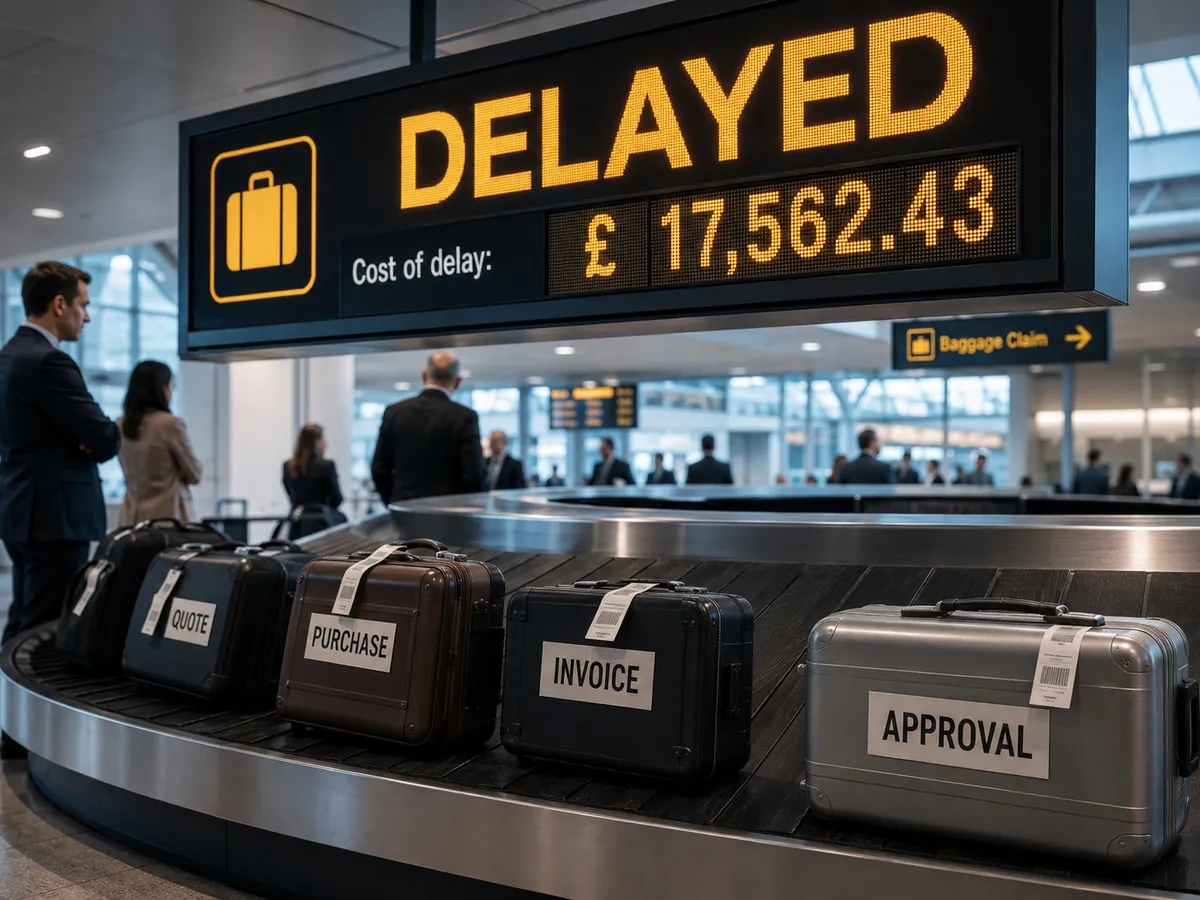
A five-minute approval can leave work waiting for days. Once a quote, purchase, job or invoice misses its slot, the delay spreads into the rest of the process.
People switch tasks, schedules move, customers wait and cash arrives later. The decision itself may be quick, but the queue around it can cost far more than anyone realises.
Tomislav Simnett
9 min read