

Business
We've won a digital transformation award. Here's what really matters to us..

4 min read
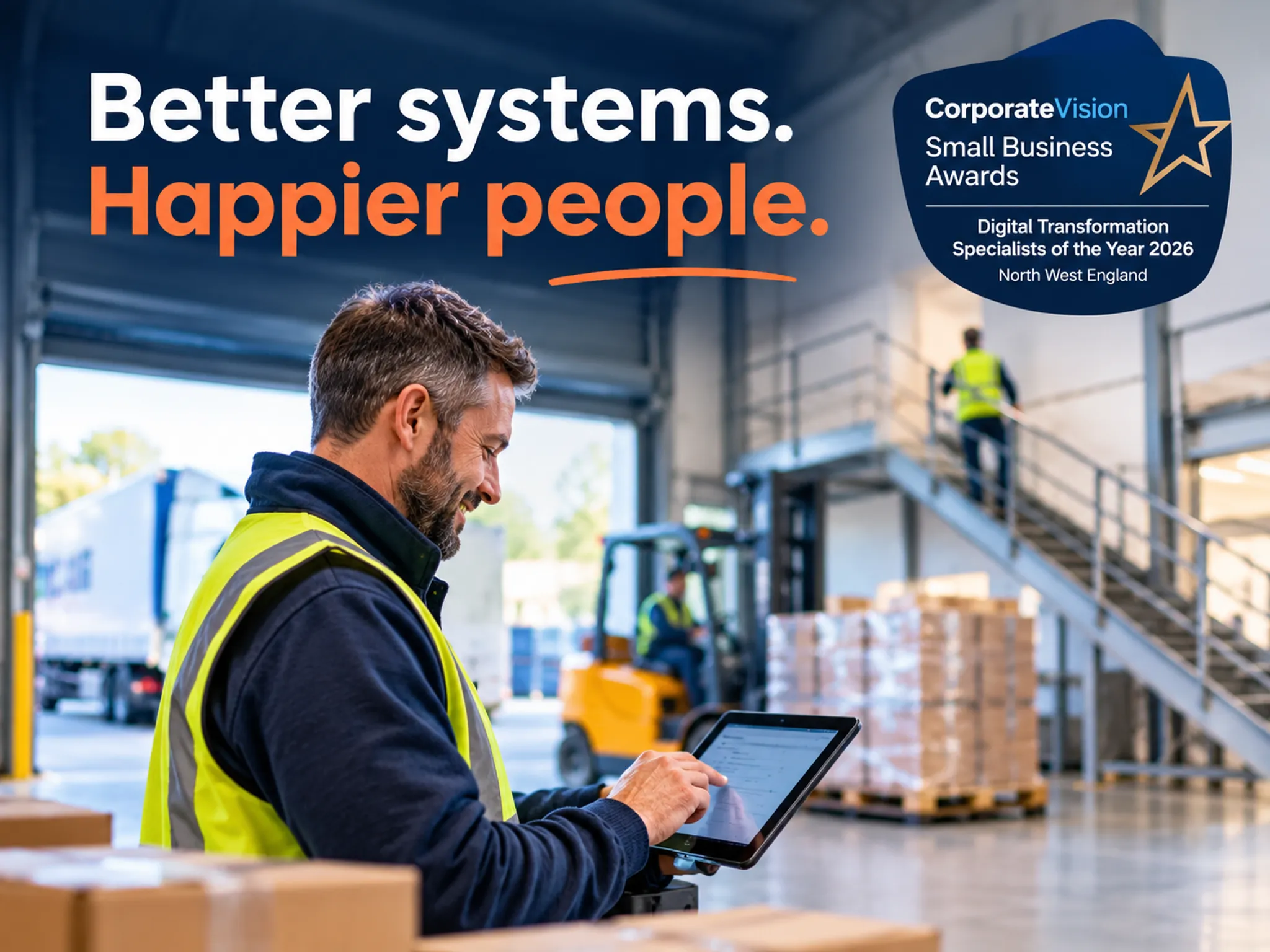
One of my favourite outcomes from a software project has nothing to do with artificial intelligence, clever algorithms or even the software itself. It's that a forklift driver no longer has to spend his day walking up and down a flight of stairs to get his job done.
That's been on my mind since Initforthe was named Digital Transformation Specialists of the Year 2026 – North West England in Corporate Vision's Small Business Awards.
It's a lovely bit of recognition, and I'm enormously proud of what we've achieved. But when I think about why we've won it, I don't think about the technology we've built. I think about the people whose working lives have become easier because of it.
And I think that's an important distinction.
A 50% improvement without asking anyone to work harder
One of the manufacturing businesses we work with had a problem with its goods-in process.
When deliveries arrived, a forklift driver had to keep trudging upstairs to an office to record what had come in. It was a process that had developed over time, and while it worked after a fashion, it was slow, frustrating and entirely dependent on somebody repeatedly leaving the job they were supposed to be doing.
We spent time understanding how the warehouse actually operated, what information was needed and where the delays were happening.
Then we built a system that allowed the work to happen where it needed to happen.
Today, a delivery can be processed in less than ten minutes, while the lorry is still there. Missing items are identified before it leaves, rather than becoming a problem somebody has to chase up afterwards.
The goods-in team has increased its throughput by 50%.
Think about that for a moment. The business can handle half as much work again, without having to ask its people to work half as hard again.
The technology made that possible, of course. But the real improvement came from understanding why the existing process was making something relatively straightforward so difficult.
That's what digital transformation means to me.
Growth shouldn't automatically mean more administration
We've seen the same thing in other businesses, although the problems can look completely different.
Take an asset finance business we've worked with. Its requirements went considerably beyond a customer portal or a simple quoting tool.
It needed a system that could manage the entire journey, from producing a quotation and proposal through to completing the deal, managing the assets and handling payments.
Rather than creating another application that people would have to work between, we built a joined-up platform around the way the business operates.
The result is a system that supports its operations from beginning to end, removes repetitive manual work and provides the foundation to handle more business. It's helped support the company's growth into major national leasing opportunities.
And that's the point.
When a business grows, the administrative workload often grows with it. More enquiries, more customers, more orders, more paperwork and more people needed to keep everything moving.
But why should that always be the case?
If the systems and processes are designed properly, a business should be able to grow without increasing its administrative workload at the same rate.
That's not about replacing people. It's about making better use of the people you've already got.
Sometimes the answer isn't AI. Sometimes it isn't even software.
Artificial intelligence is creating some genuinely exciting opportunities, and we're using it where it makes sense.
But I do worry that businesses are increasingly being encouraged to start with the technology rather than the problem.
Everybody seems to be asking where they can introduce AI, what they can automate or which new platform they should buy.
I'd rather start somewhere else.
What are your people spending their time doing? Which tasks frustrate them? Where does information get stuck? What work is being done simply because that's how the business has always operated?
And perhaps most importantly, does that work actually need to happen at all?
There's little value in spending money automating a process that shouldn't exist in the first place.
Sometimes we'll recommend building bespoke software. Sometimes it's about connecting systems that already exist. Sometimes AI can make an enormous difference.
And sometimes the best thing we can do is help a business remove a completely unnecessary step from the way it works.
We've been doing this at Initforthe since 2004, and the more businesses we work with, the more convinced I become that understanding people and processes is the most important part of any technology project.
The software comes afterwards.
An award that belongs to more than us
I also want to recognise the people who've made this award possible.
Our team puts an enormous amount of thought and effort into building systems that are not only technically sound but genuinely pleasant and intuitive to use. That's something I care deeply about, because even the most capable system is a failure if the people using it find it frustrating.
And then there are our clients.
The best projects happen when people are willing to show us how their business actually operates, including the bits that don't work particularly well. It takes trust to invite somebody into your organisation and let them question processes that might have been in place for years.
We're fortunate to work with businesses that are prepared to have those conversations and make meaningful changes.
Our mission at Initforthe is deliberately ambitious: to make every member of staff across every organisation globally fundamentally happy at work.
I know that software alone can't achieve that. But if we can remove unnecessary frustrations, give people back their time and help them enjoy the work they're actually employed to do, that's a pretty good place to start.
So, what does this mean for your business?
I'm delighted that we've received this recognition from Corporate Vision, and it's encouraging to see our approach to digital transformation recognised.
But I don't want this to be just another post about winning an award.
I'd much rather it encouraged somebody running a business to look at the way their organisation works and ask a few questions.
Are your people spending their time doing the work they're good at, or working around the systems that are supposed to help them?
Is growth creating more opportunities, or simply more administration?
And if you could change just one thing about the way your business operates, what would make the biggest difference to the people working there?
You might be surprised by the answer.
Winning an award is lovely. But knowing that somebody can go home at the end of the day having had an easier, less frustrating working day because of something we've built? That's why we do this.
If any of this sounds familiar, let's have a conversation. You don't need to know what technology you need. That's something we can work out together.
About Tomislav Simnett

Tomislav Simnett
Managing Director, Initforthe · Software & AI Consultant
Tomislav helps businesses work better through bespoke software development, AI consultancy, CRM systems and automation. He founded Initforthe in 2004 and believes technology should make work easier for the people using it.
How much capacity is your business leaving behind?
Use the calculator to estimate what slow processes, manual work and disconnected systems could really be costing you.
More posts.
View all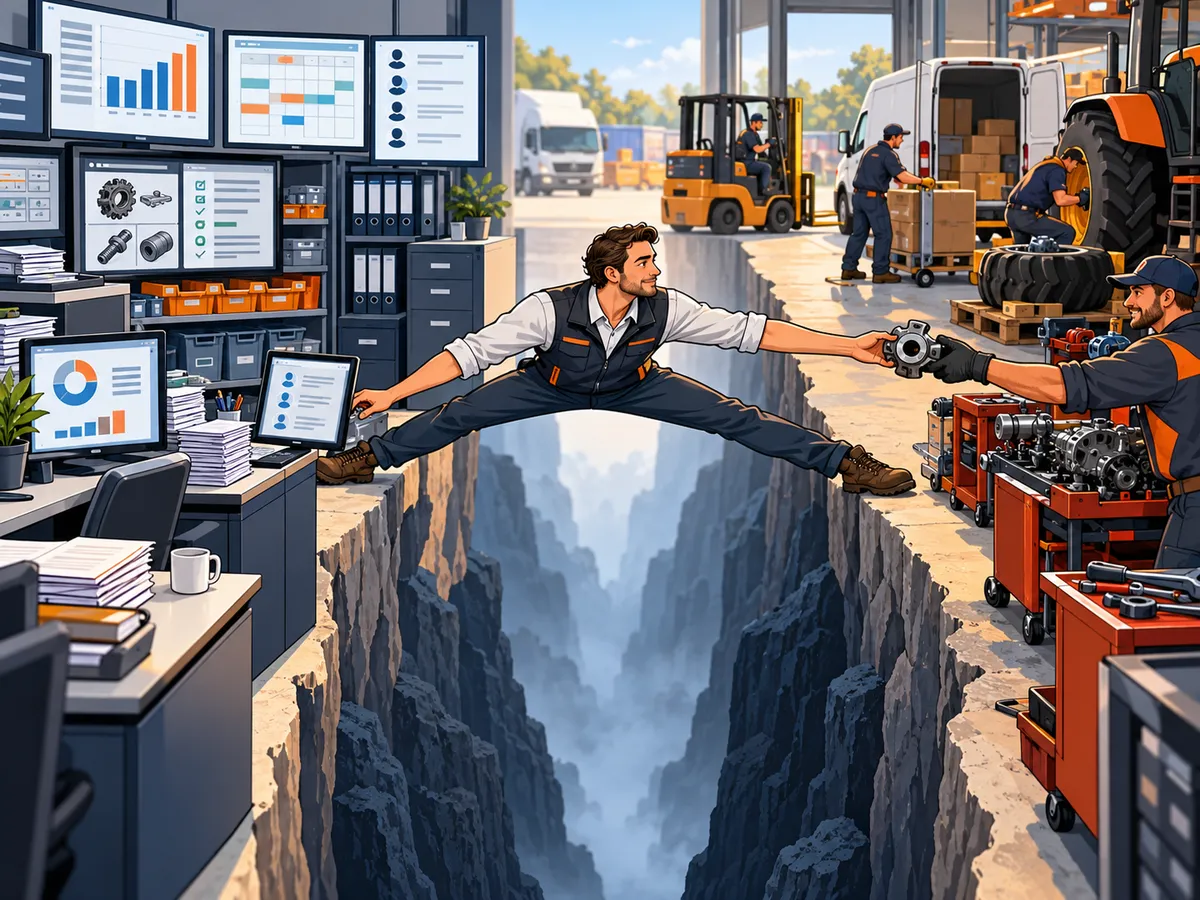
Business
Your Software Holds the Data. But Does It Know How Your Business Works?
Your software might hold all the data about your business, but does it actually know how your business works? In two recent conversations, I challenged business leaders to question something they'd always taken for granted: whether the work their people were doing needed a person to do it at all.
From unnecessary CRM administration to an entire department dependent on one employee's knowledge, both conversations revealed opportunities that went far beyond making existing tasks easier. What if our systems could understand how work happens, learn from our best people and eventually take responsibility for much of the routine work themselves?
Tomislav Simnett
8 min read
Tech
AI can write the code. Your business still needs an engineer
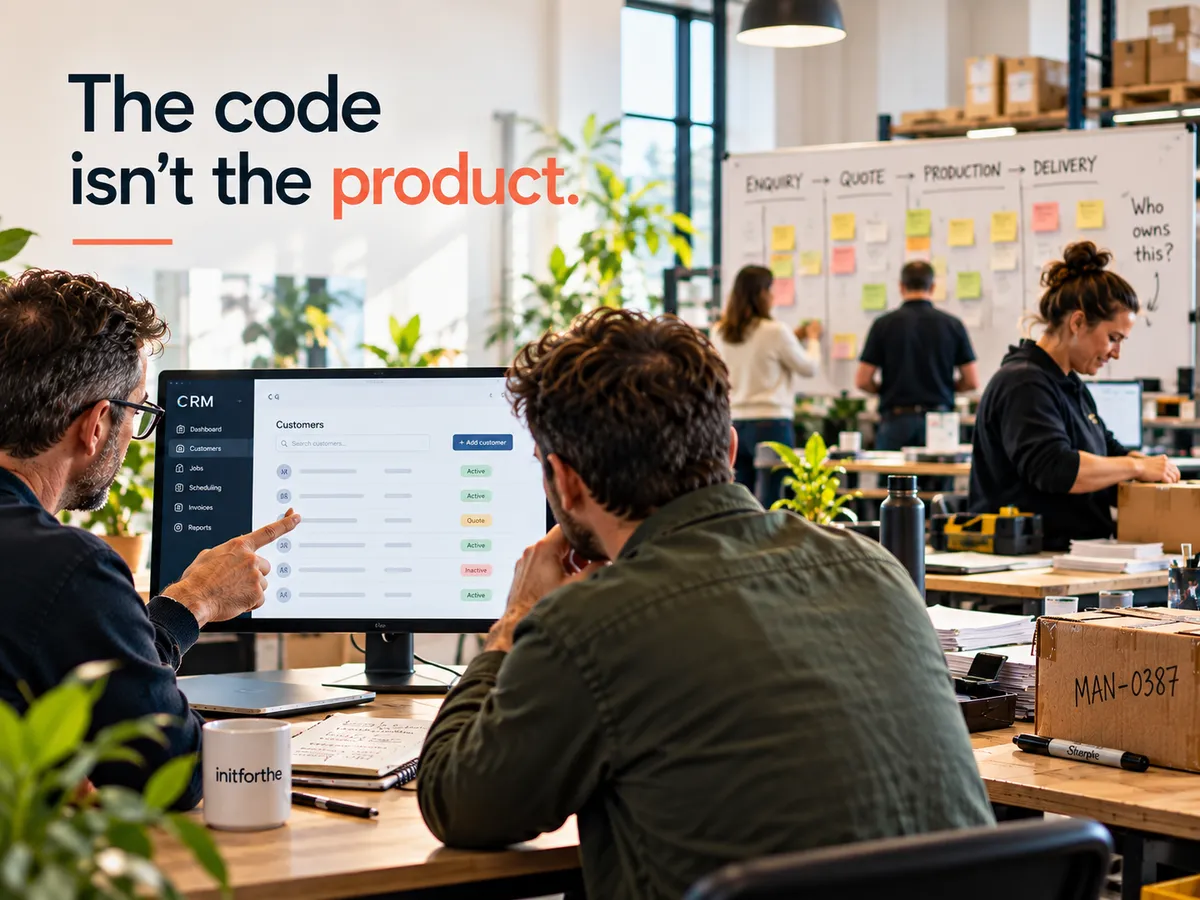
AI can now write a lot of the code we used to pay developers to write. That doesn’t make software engineering irrelevant. It makes the bit that was always more important much harder to ignore: understanding what should be built in the first place.
Vibe coding can turn your assumptions into working software incredibly quickly. But if the assumption is wrong, you’ve simply built the wrong thing faster. Good engineering starts before the app, CRM or automation. It starts by understanding how the business actually works, where people add judgement, and which parts of the process shouldn’t exist at all.
Tomislav Simnett
11 min read
Business
Four interruptions, two lost hours and the process your people shouldn’t be driving
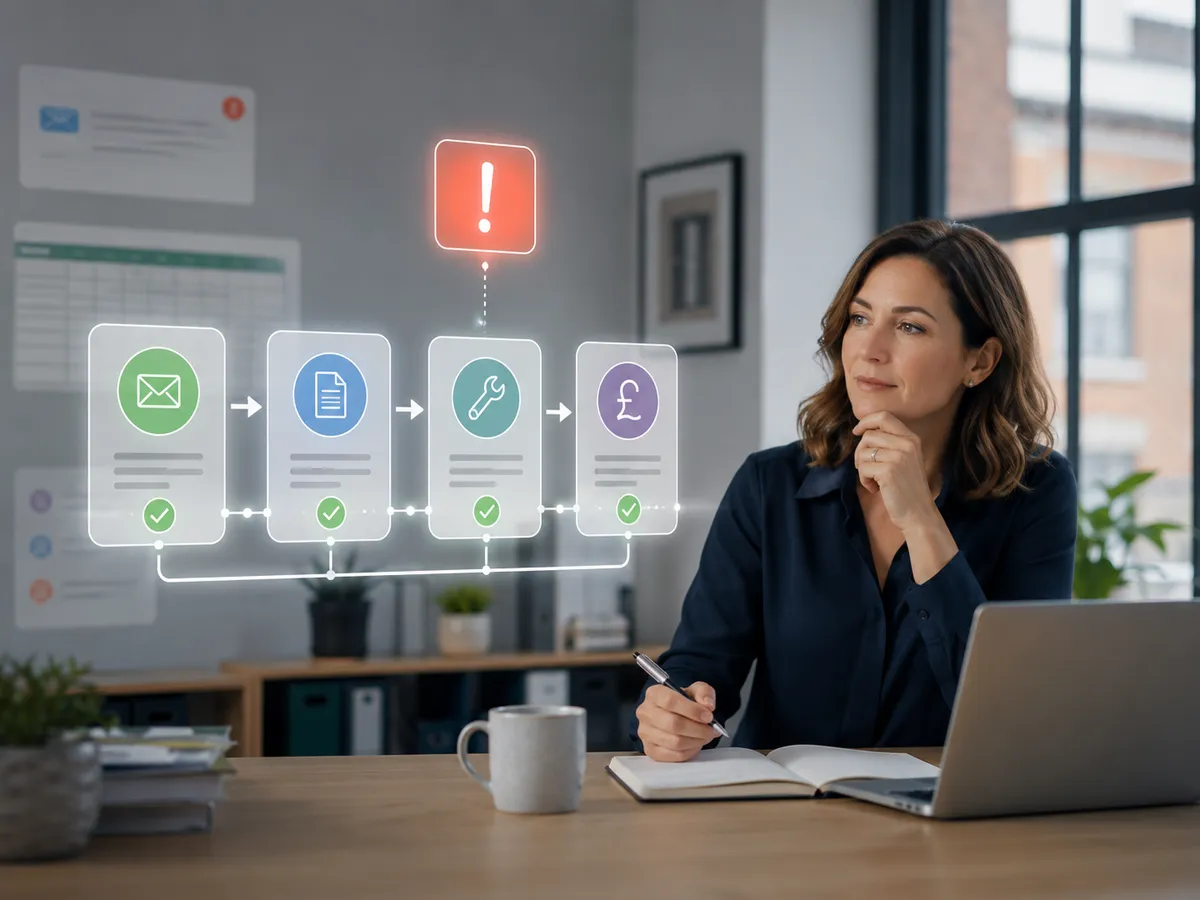
Four interruptions can wipe nearly two hours from the useful part of a working day, and that’s before you count the interruption itself. Add long manual processes, routine human error, rework and stress, and you get a working environment where good people spend too much time recovering, correcting and chasing.
The answer isn’t to tell people to focus harder. It’s to design a better system, one that drives the process, preserves context, moves routine work automatically and only interrupts people when their judgement is genuinely needed.
Tomislav Simnett
10 min read