

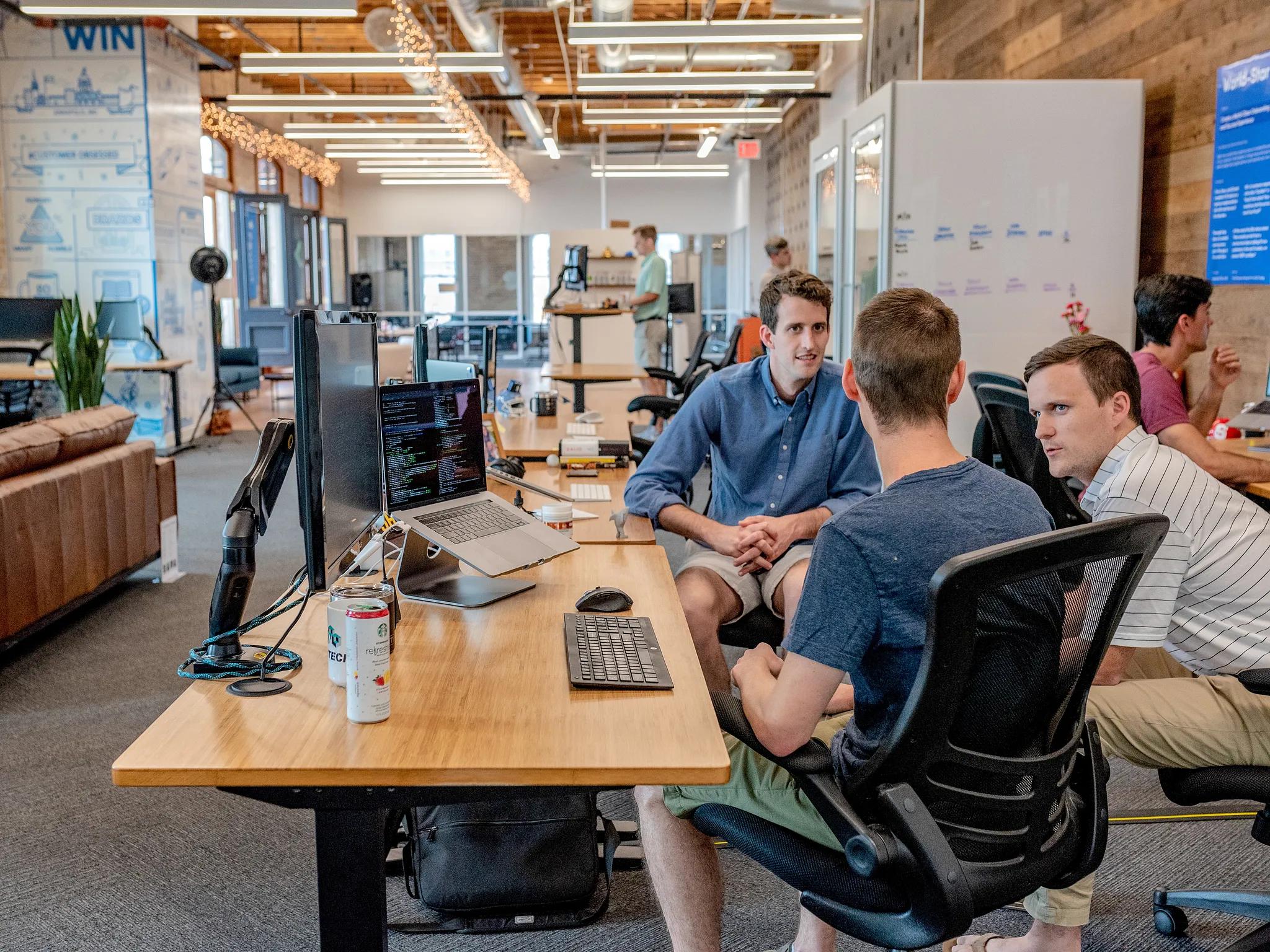
Every small business knows that they can change faster than their larger competitors. The flip-side of that coin is that most ambitious business owners would love to have one of those larger businesses, but don't want to trade the agility of being small. A big tanker can carry more containers, but doesn't have the turning circle of a small and nimble speed boat. It's the turning circle that gets you places when you're small.
Interestingly though, it's also what gets you places when you're big! So, the purpose of this post is to show you just how important it is to practice Agile across your whole business.
To start with, I'm going to tell you about a company some of you may have heard about: Blockbuster. Who remembers them? That's right, they went bust and by 2014, they had no stores remaining. Who took them out? The plucky little (back then) Netflix. What was even more frustrating for the Blockbuster board was that they'd had the opportunity in 2000 to buy Netflix for a meagre $50m.
Netflix started out as a mail-order DVD service. I was a member back then and I paid a subscription where you could choose how many DVDs you wanted each week. I had a list I curated of things I wanted to watch, and as long as I returned the DVD I had watched, I'd get another in the post the following week. If I didn't, I wouldn't get another one until that one had been returned.
In 2007, Netflix started to transition to a streaming service (did you know their original DVD-by-mail service still exists?) as broadband became more readily available, and then in 2013 started to develop its own content.
The way they have adopted an Agile approach to an ever changing landscape, as other contenders (Disney+, local TV streaming services, Amazon Prime etc) have come up, is in a big part the reason for their resilience. The Netflix "brand" of agile is even written about by Scrum Alliance, the largest association of Agile professionals in the world.
By focusing on continuous improvement, iterative and short cycles and clear feedback loops, and by putting people first (whether that be customers or staff, depending on the project), they've found new ways to innovate and deliver what many consider to be an excellent service. They have fought battles against the likes of Apple, have you noticed that they don't let you sign up in-app on iOS? They have integrated with TV manufacturers, Google, Apple and others across a whole ecosystem of devices, and were early to deliver the best possible resolutions in their own content. That's not just in the delivery, but in how they film and produce that content.
At every step along the journey of the company, from small fledgling to large behemoth, you can see the agile approach at play. That's because it's part of their culture. So Agile is definitively a people thing. You can't do it if the culture that comes from the top doesn't support that style of work. It won't work if your company has a distaste for curiosity and for questioning the status quo. It won't work if you or your company suffers from "that's the way we've always done it"-itis.
And here's the kicker. If your business doesn't support a truly agile approach to doing business, you're unlikely to reach heights the kinds of which Amazon, Netflix, SpaceX, and so many others have been able to do. Why? Because the people across the organisation hold the keys to the kingdom. They're the ones to listen to, and to enact the change that is required. They can and will have the company's best interests at heart, but only if you let them.
So how do you start? Look at your customer experience. Note down all the ways that you could improve it, if there were no barriers to that change. For example, if your immediate thought is "I'm going to have to send another email", don't worry. That can all be automated. Now consider how much of the process could be automated, and what parts of it would give you the biggest gains by being more streamlined.
I imagine you're already finding that you're getting your time back and that of your teams. Let's say you save 80% of your time through automation. That means you can now do 5x more business with the same people. What does 5x your business look like? Your Big Hairy Audacious Goal might just have got a tad bigger.
Want to find out more? Get in touch with our team today.
Interestingly though, it's also what gets you places when you're big! So, the purpose of this post is to show you just how important it is to practice Agile across your whole business.
To start with, I'm going to tell you about a company some of you may have heard about: Blockbuster. Who remembers them? That's right, they went bust and by 2014, they had no stores remaining. Who took them out? The plucky little (back then) Netflix. What was even more frustrating for the Blockbuster board was that they'd had the opportunity in 2000 to buy Netflix for a meagre $50m.
Netflix started out as a mail-order DVD service. I was a member back then and I paid a subscription where you could choose how many DVDs you wanted each week. I had a list I curated of things I wanted to watch, and as long as I returned the DVD I had watched, I'd get another in the post the following week. If I didn't, I wouldn't get another one until that one had been returned.
In 2007, Netflix started to transition to a streaming service (did you know their original DVD-by-mail service still exists?) as broadband became more readily available, and then in 2013 started to develop its own content.
The way they have adopted an Agile approach to an ever changing landscape, as other contenders (Disney+, local TV streaming services, Amazon Prime etc) have come up, is in a big part the reason for their resilience. The Netflix "brand" of agile is even written about by Scrum Alliance, the largest association of Agile professionals in the world.
By focusing on continuous improvement, iterative and short cycles and clear feedback loops, and by putting people first (whether that be customers or staff, depending on the project), they've found new ways to innovate and deliver what many consider to be an excellent service. They have fought battles against the likes of Apple, have you noticed that they don't let you sign up in-app on iOS? They have integrated with TV manufacturers, Google, Apple and others across a whole ecosystem of devices, and were early to deliver the best possible resolutions in their own content. That's not just in the delivery, but in how they film and produce that content.
At every step along the journey of the company, from small fledgling to large behemoth, you can see the agile approach at play. That's because it's part of their culture. So Agile is definitively a people thing. You can't do it if the culture that comes from the top doesn't support that style of work. It won't work if your company has a distaste for curiosity and for questioning the status quo. It won't work if you or your company suffers from "that's the way we've always done it"-itis.
And here's the kicker. If your business doesn't support a truly agile approach to doing business, you're unlikely to reach heights the kinds of which Amazon, Netflix, SpaceX, and so many others have been able to do. Why? Because the people across the organisation hold the keys to the kingdom. They're the ones to listen to, and to enact the change that is required. They can and will have the company's best interests at heart, but only if you let them.
So how do you start? Look at your customer experience. Note down all the ways that you could improve it, if there were no barriers to that change. For example, if your immediate thought is "I'm going to have to send another email", don't worry. That can all be automated. Now consider how much of the process could be automated, and what parts of it would give you the biggest gains by being more streamlined.
I imagine you're already finding that you're getting your time back and that of your teams. Let's say you save 80% of your time through automation. That means you can now do 5x more business with the same people. What does 5x your business look like? Your Big Hairy Audacious Goal might just have got a tad bigger.
Want to find out more? Get in touch with our team today.
How much capacity is your business leaving behind?
Use the calculator to estimate what slow processes, manual work and disconnected systems could really be costing you.
More posts.
View all
Tech
AI can write the code. Your business still needs an engineer
AI can now write a lot of the code we used to pay developers to write. That doesn’t make software engineering irrelevant. It makes the bit that was always more important much harder to ignore: understanding what should be built in the first place.
Vibe coding can turn your assumptions into working software incredibly quickly. But if the assumption is wrong, you’ve simply built the wrong thing faster. Good engineering starts before the app, CRM or automation. It starts by understanding how the business actually works, where people add judgement, and which parts of the process shouldn’t exist at all.

Tomislav Simnett
11 min read

Business
Four interruptions, two lost hours and the process your people shouldn’t be driving
Four interruptions can wipe nearly two hours from the useful part of a working day, and that’s before you count the interruption itself. Add long manual processes, routine human error, rework and stress, and you get a working environment where good people spend too much time recovering, correcting and chasing.
The answer isn’t to tell people to focus harder. It’s to design a better system, one that drives the process, preserves context, moves routine work automatically and only interrupts people when their judgement is genuinely needed.
Tomislav Simnett
10 min read

Business
The approval takes five minutes. The waiting costs far more.
A five-minute approval can leave work waiting for days. Once a quote, purchase, job or invoice misses its slot, the delay spreads into the rest of the process.
People switch tasks, schedules move, customers wait and cash arrives later. The decision itself may be quick, but the queue around it can cost far more than anyone realises.
Tomislav Simnett
9 min read