

Business
What if your business could grow without all the extra administration?.

3 min read
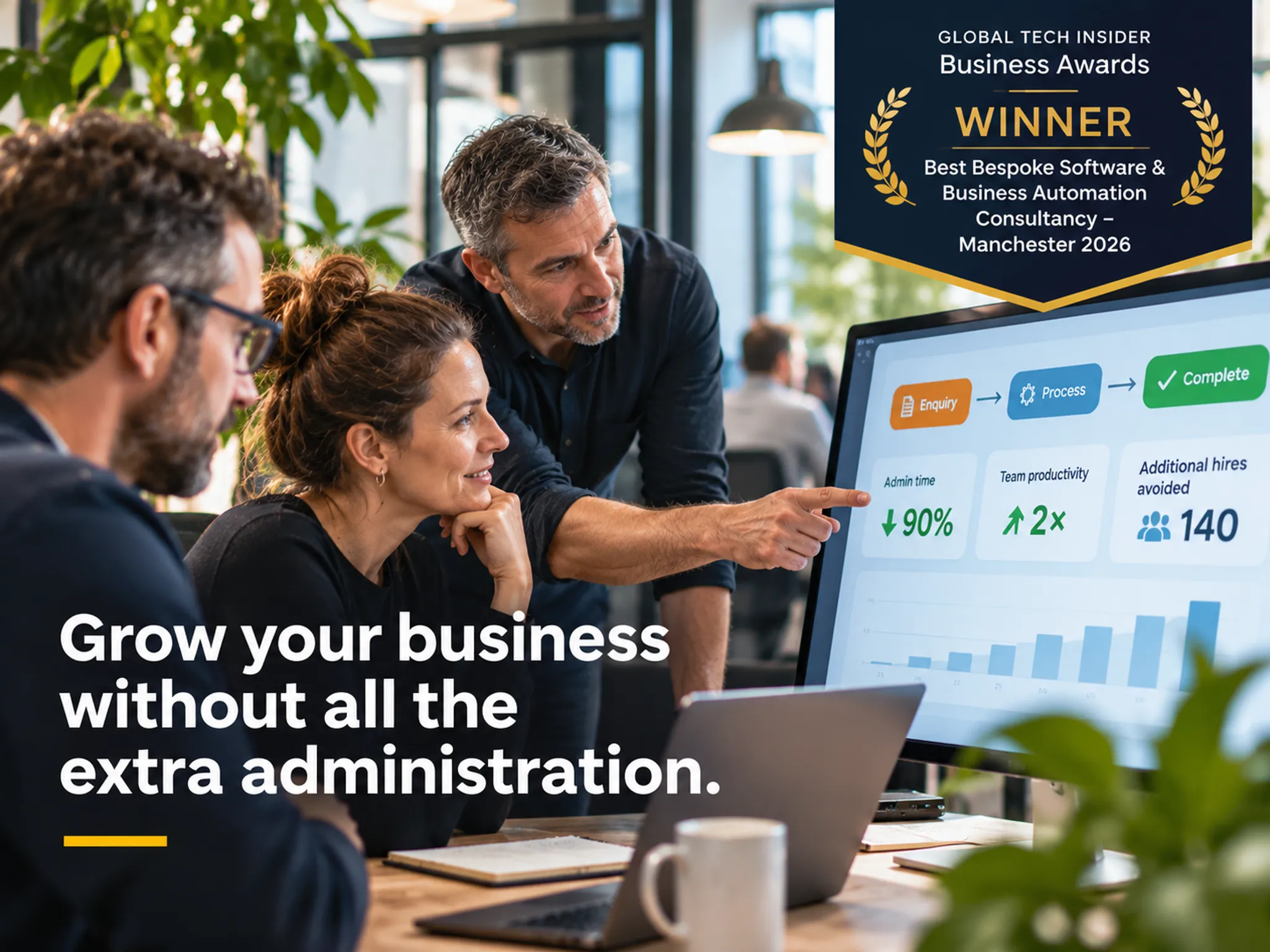
We've just been named Best Bespoke Software & Business Automation Consultancy – Manchester 2026 in the Global Tech Insider Awards.
It's another lovely piece of recognition for Initforthe, and I'm delighted that the work we're doing is being noticed.
But there's a particular conversation with one of our clients that I think explains what good business automation can really achieve.
They told us that, without the systems we've built for them over the years, they'd need around 140 additional employees to handle their current workload.
At their estimated staffing costs, that's close to £10 million a year in expenditure they've been able to avoid.
That's their assessment, not a number we've calculated to make ourselves look impressive. And it raises an interesting question.
Why do we so readily accept that growing a business means having to grow its administrative workload at the same rate?
The problem isn't always the amount of work
We've worked with this particular business for many years, building and improving the systems that support its operations.
Back in 2019, we made changes to the way its team progressed deals through the business.
Those changes reduced the time spent on the process by 90%.
Now, that's an impressive saving on its own. But something else happened that was arguably more important.
People stopped spending so much of their day being interrupted, searching for information, switching between different systems and trying to remember what they were doing before something else demanded their attention.
We've all experienced that.
You're concentrating on something, somebody needs information from you, and you have to stop what you're doing to find it. By the time you've dealt with their question and returned to your original task, you've lost your train of thought.
Multiply that across an entire team, day after day, and you start to understand why apparently small inefficiencies can have such an enormous impact.
By addressing the processes and the interruptions surrounding them, the overall improvement went beyond the 90% saving in deal progression time. The business saw its people's productivity double.
And we've continued developing those systems as the business has grown.
What happens when the business gets bigger?
Growth is often treated as a fairly straightforward equation.
More customers mean more transactions. More transactions mean more administration. More administration means employing more people.
But that's only inevitable if the amount of work required for each transaction stays the same.
Imagine a business where every new customer creates another series of spreadsheets to update, emails to send, documents to generate and internal messages to chase.
You can keep hiring people to deal with it. Or you can find out why all that activity is necessary in the first place.
Sometimes the answer is better software. Sometimes it's connecting systems that should have been talking to one another all along.
Sometimes it's redesigning a process so that information is captured once and everybody who needs it can use it without having to ask somebody else.
And yes, sometimes AI is part of the answer too.
But I think businesses need to be careful about simply automating everything they're already doing. There's little point building an elaborate automated process around work that shouldn't exist.
The people are the important part
One thing I particularly appreciate about this latest award is that it recognises both bespoke software and business automation.
The two work together, but neither should be an objective in its own right.
We don't build systems because businesses need more software. We build them because people need a better way to get things done.
When somebody no longer has to spend half their day copying information between applications, they can concentrate on the job they were actually employed to do.
When a manager can see what's happening without interrupting everybody for updates, the whole team benefits.
And when a business can increase its capacity without constantly increasing its overheads, it has more freedom to invest in its people, its customers and its future.
That's what we've spent more than two decades working towards.
I'm enormously grateful to our team, whose expertise and attention to detail make these outcomes possible, and to the clients who trust us to challenge how their businesses operate.
Thank you also to Global Tech Insider for recognising our work.
Could your business grow differently?
If your business is growing, or you're trying to work out how to help it grow, there's a question I'd encourage you to consider.
If your turnover doubled tomorrow, would your administration have to double with it?
If the answer is yes, it might be worth understanding why before employing the next person to keep everything moving.
That doesn't necessarily mean you need bespoke software. It certainly doesn't mean you need AI.
It means there's probably an opportunity to make the business work better.
And that's a conversation we're always happy to have.
About Tomislav Simnett

Tomislav Simnett
Managing Director, Initforthe · Software & AI Consultant
Tomislav helps businesses work better through bespoke software development, AI consultancy, CRM systems and automation. He founded Initforthe in 2004 and believes technology should make work easier for the people using it.
How much capacity is your business leaving behind?
Use the calculator to estimate what slow processes, manual work and disconnected systems could really be costing you.
More posts.
View all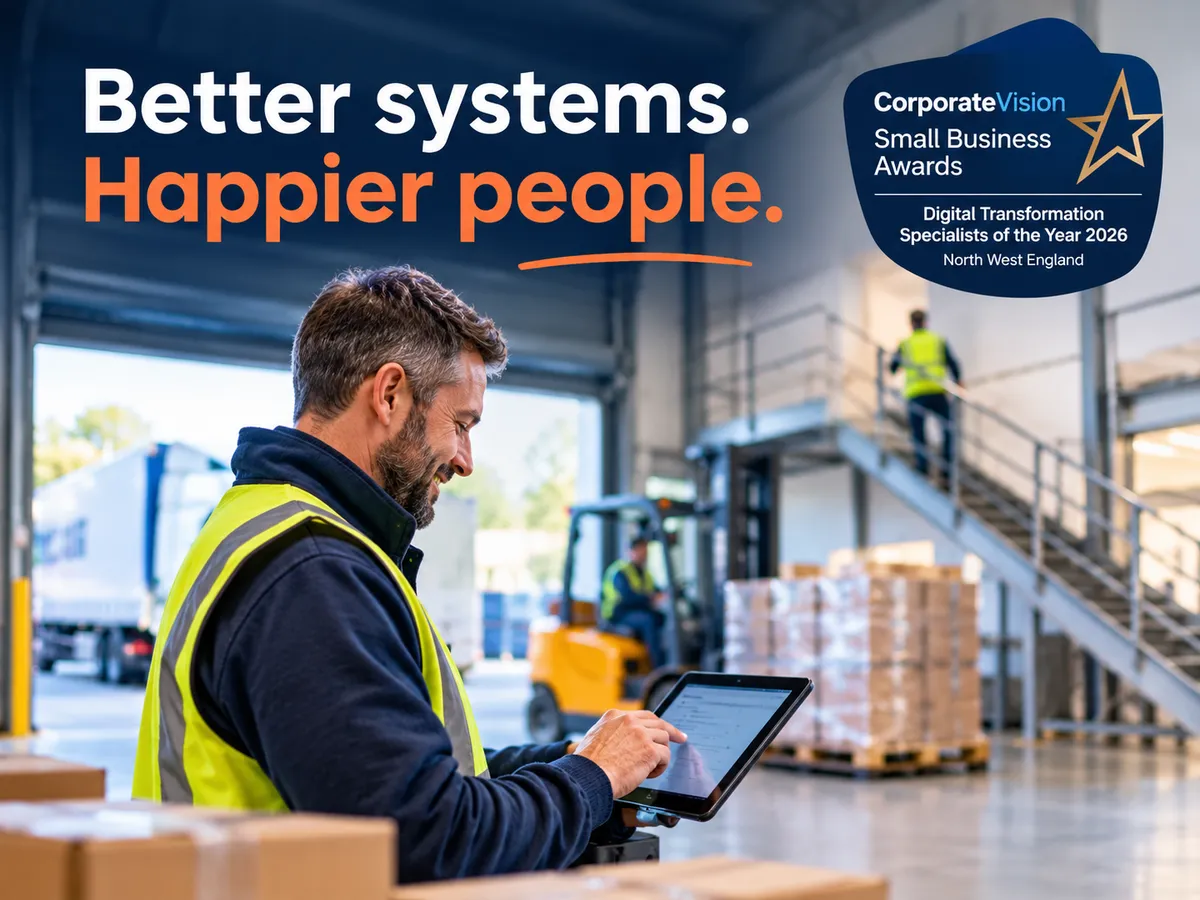
Business
We've won a digital transformation award. Here's what really matters to us.
We've been named Digital Transformation Specialists of the Year 2026 – North West England. It's lovely recognition, but what matters more is the difference behind it: less paperwork, fewer frustrating processes and businesses able to grow without asking their people to work harder. That's what good technology should achieve.
Tomislav Simnett
4 min read

Business
Your Software Holds the Data. But Does It Know How Your Business Works?
Your software might hold all the data about your business, but does it actually know how your business works? In two recent conversations, I challenged business leaders to question something they'd always taken for granted: whether the work their people were doing needed a person to do it at all.
From unnecessary CRM administration to an entire department dependent on one employee's knowledge, both conversations revealed opportunities that went far beyond making existing tasks easier. What if our systems could understand how work happens, learn from our best people and eventually take responsibility for much of the routine work themselves?
Tomislav Simnett
8 min read
Tech
AI can write the code. Your business still needs an engineer
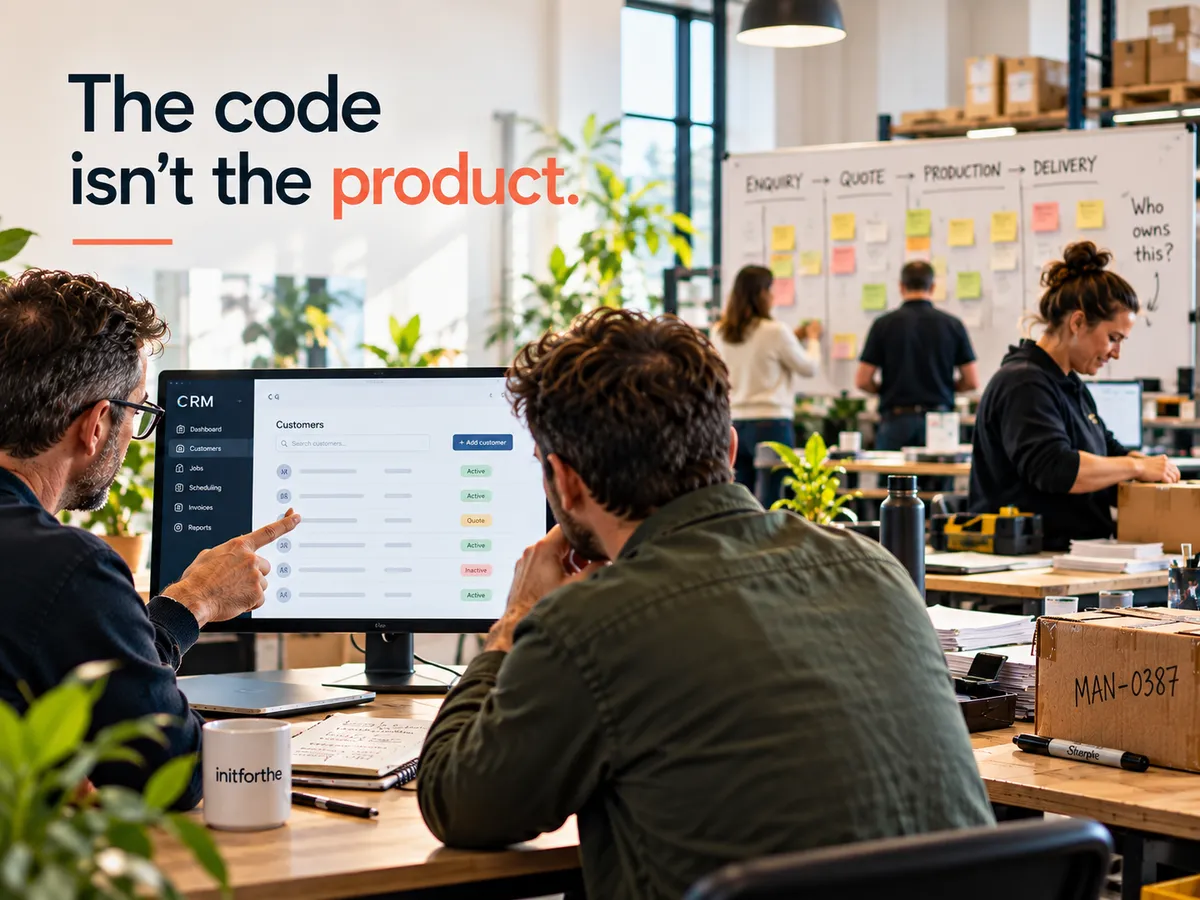
AI can now write a lot of the code we used to pay developers to write. That doesn’t make software engineering irrelevant. It makes the bit that was always more important much harder to ignore: understanding what should be built in the first place.
Vibe coding can turn your assumptions into working software incredibly quickly. But if the assumption is wrong, you’ve simply built the wrong thing faster. Good engineering starts before the app, CRM or automation. It starts by understanding how the business actually works, where people add judgement, and which parts of the process shouldn’t exist at all.
Tomislav Simnett
11 min read